



EMDR vs CBT vs Somatic Therapy: Which Fits a High Functioning Mind?

November 3, 2026

CBT works through your thinking, EMDR works through the memories that keep your body on alert, and somatic therapy works through your body's stress responses directly. For a high functioning mind, the best fit depends on where your distress actually lives: in your thoughts, in specific memories, or in sensations you cannot talk your way out of.

If you have been through talk therapy before and understood everything, yet still wake up with a tight chest, this guide is for you.

In case you are new here, I am Monica Helvie, a Licensed Marriage and Family Therapist offering body-based, trauma-informed therapy for high-achieving millennial adults at Insight Clinical Counseling. I use all three of these approaches in my practice, which means I have no reason to oversell any one of them.

Below, I explain how each approach works, what the research does and does not say, and how I think about matching them to the people I work with.

Key takeaways

  • CBT is the most researched of the three and works best when unhelpful thought patterns drive your distress.
  • EMDR targets specific memories and the beliefs attached to them, and it does not require long retelling.
  • Somatic therapy works with the body's stress responses and fits people who understand their patterns and still feel stuck.
  • The research base is strongest for CBT and EMDR in PTSD, and smaller for somatic approaches, so I treat somatic work as a complement.
  • These approaches combine well, and many clients move through more than one over time.

What is the difference between EMDR, CBT, and somatic therapy?

All three can help with anxiety, trauma, and burnout patterns. They differ in the doorway they use to get there.

  • CBT works through thoughts, behaviors, and the links between them. A session feels structured, with goals, exercises, and homework. It tends to fit when your distress follows clear thought patterns or avoidance habits.
  • EMDR works through specific memories and the beliefs stored with them. A session involves focused sets of bilateral stimulation, with short check ins. It tends to fit when certain memories still carry a charge you cannot reason away.
  • Somatic therapy works through body sensations, breath, and nervous system responses. A session is slower, with attention to what your body does as you speak. It tends to fit when you understand your history and your body still reacts.

How does CBT work, and who is it best for?

Cognitive behavioral therapy looks at how your thoughts, feelings, and behaviors affect each other. You learn to notice an automatic thought, test it against evidence, and change the behaviors that keep the pattern going.

The American Psychological Association places CBT in the first line group of treatments for PTSD and describes it as typically delivered over 12 to 16 sessions, in individual or group format.

CBT tends to suit people who like structure, enjoy homework, and want clear tools. It can be a strong choice for anxiety, avoidance, and unhelpful self talk. The limit I see most often with high achievers is that you can become very skilled at CBT and still feel the old reaction in your body. You can argue with a thought and the tight chest stays.

How does EMDR work, and who is it best for?

EMDR helps your brain reprocess specific memories that still feel active. You hold a memory in mind while following a back and forth stimulus, such as eye movements or taps, and you report what you notice between short sets. You do not need to narrate the whole story.

EMDR tends to fit people who can name the moments that still sting, such as a public failure, a harsh parent, or a betrayal, and who want relief without relitigating every detail. If you want the full picture of what a session involves, you can read about my approach to EMDR therapy.

emdr vs cbt vs somatic therapy

How does somatic therapy work, and who is it best for?

Somatic therapy starts from the idea that stress and trauma live in the body as well as the mind. A session might involve tracking sensation, noticing where you tighten when you talk about work, and practicing small shifts in breath and posture while you stay with what you feel.

I want to be careful here. The research base for somatic approaches is smaller than for CBT or EMDR, and I do not present it as a replacement for either. In my practice, I use somatic work as a foundation and a companion. It helps your system settle enough to do other work, and it helps the changes from that work register in your body.

Somatic therapy tends to fit people who say, "I know exactly why I react this way, and I still do." You can read more about how I use somatic therapy in sessions.

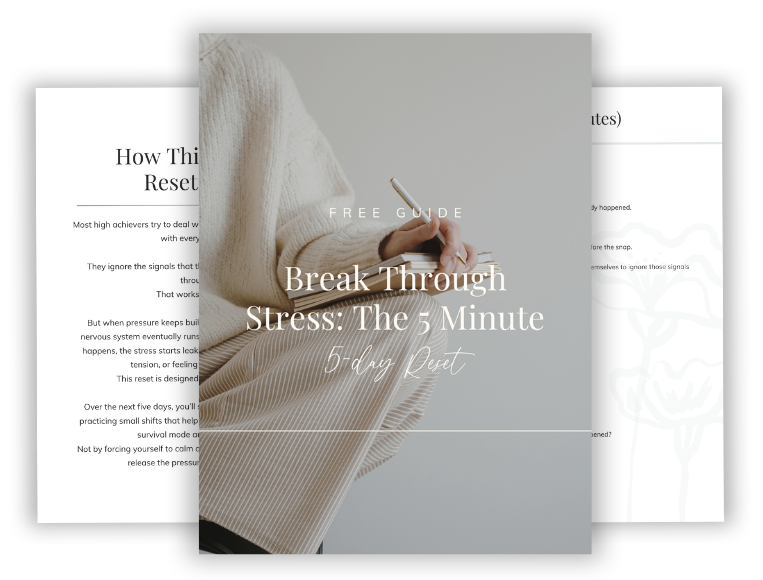
If you want your nervous system steadier before you ever sit in a therapy session, five minutes a day is a good place to start. I made a free 5 day reset guide for exactly this.

Get my free 5 day reset guide, pick up one five minute grounding practice per day, and start building a steadier baseline.

Which approach fits a high functioning mind?

High functioning does not mean low distress. It means you have built systems to keep performing while you carry something heavy. These are the patterns I see most often and how I think about each.

What if I think my way through everything?

If analysis is your main coping tool, CBT can feel natural, and it can be a good starting point because it gives you structure and language. If you have already done a lot of this work, EMDR or somatic therapy often reaches what analysis cannot. Many of my clients describe a moment where they realized they had been solving a problem in their head that lived in their body.

What if talk therapy has not changed how I feel?

When you can explain your patterns in detail and your reactions have not shifted, that is usually a sign the work needs to reach the memory or the body. EMDR and somatic therapy are the two doors I reach for first in this situation.

What if I am burned out and cannot access my feelings?

Emotional flatness is common in high achievers who have been running on empty. I usually begin with somatic work and nervous system regulation, because processing memories works better when your system has some capacity. If this sounds like you, the patterns often overlap with high functioning anxiety.

Can you combine EMDR, CBT, and somatic therapy?

Yes, and in my experience combining them often works better than choosing one. A common sequence looks like this. We start with regulation and somatic skills so your system can handle the work. We move into EMDR for the specific memories that drive your reactions. We use cognitive tools along the way to update the beliefs and habits that grew around them.

The order depends on you. Some people need CBT skills first to feel in control. Others need the body work first because their mind is too loud to use skills at all. I adjust as we go, and I tell you why.

How do I choose a therapist for the approach I want?

Look for training in the approach, and ask how the therapist decides what to use with you. A clinician who only has one tool will tend to recommend that tool. Useful questions include: What training do you have in this approach? How do you decide between approaches? What happens if this one is not helping?

It also helps to choose someone who understands the way high achievers think. You will likely want a therapist who can handle your questions without getting defensive and who explains the reasoning behind the plan.

Frequently asked questions

Which is best for anxiety?

EMDR and somatic therapy can help when anxiety is tied to specific experiences or lives in the body. Many people benefit from a blend.

Do I need a trauma diagnosis to try EMDR or somatic therapy?

No. You do not need a formal diagnosis to benefit. A therapist will talk through your history and goals and recommend a starting point.

Can I do these therapies online?

Yes. CBT and somatic work translate well to virtual sessions, and EMDR can be done virtually with on screen tools or audio tones. I offer virtual sessions across Texas.

You don't have to navigate choosing a therapy alone

Comparing approaches is a very high performer way to begin, and it is a good instinct. At some point a conversation will tell you more than another article, and a first call is a low pressure way to find out which approach fits.

I see clients in person in Farmersville, serve Rockwall, Heath, and the surrounding North Texas communities, and offer virtual sessions in Austin and across Texas.

Woman seated in a modern chair, smiling in a bright room with plants and framed wall art.

Hi, I’m Monica Helvie

A Licensed Marriage and Family Therapist and trauma therapist serving the Rockwall-Heath, TX area and nearby communities.

Stacked wellness worksheet covers, with “Break through Stress: The 5 Minute” on a gray cover
eldest daughter burnout
November 3, 2026
Eldest daughter burnout explained: the signs, why the responsible one role drains you, and what actually helps beyond rest, boundaries, and a long weekend.

eldest daughter trauma
November 3, 2026
Eldest daughter trauma explained: where it comes from, the signs in high-achieving women, and how therapy helps you put down the responsible one role.

emdr therapy side effects
November 3, 2026
EMDR therapy side effects explained: what is normal, what is not, when to call your therapist, and how to prepare so sessions fit around a busy work schedule.

emdr for childhood trauma
November 3, 2026
How EMDR therapy helps childhood trauma in high achieving adults, what it can and cannot do, and how a careful, paced process works for driven professionals.

brainspotting vs emdr
November 3, 2026
Brainspotting vs EMDR: how they differ, what the research shows, and how to choose if you are hyper independent and would rather not talk about feelings.

does emdr actually work
November 3, 2026
Does EMDR actually work? An honest look at the research and its real limits, plus how a high achiever can tell whether EMDR therapy is working for them.